
How Modern Web Development Evolved, Era by Era
Web frameworks did not evolve linearly. They evolved in response to pressure—new user expectations, larger teams, growing codebases, and changing deployment models.
What developers often describe as “framework wars” are better understood as waves of problem-solving, in which each generation of tools seeks to address the shortcomings of the last. Each wave reflects not just new technology, but a shift in how teams think about scale, ownership, and long-term change.
This guide documents the significant evolution of web frameworks, the problems that defined each era, and the architectural patterns that emerged as a result.
Era 1: Early Web & Language Wars (≈ 1995–2004)
Core problem: How do we build dynamic websites?
In the earliest phase of the web, there were no modern frameworks. Dynamic behavior was implemented directly through server-side scripting.
Dominant approaches
- CGI scripts (often written in Perl or C)
- Early PHP
- Classic ASP
- Java Servlets and JSP
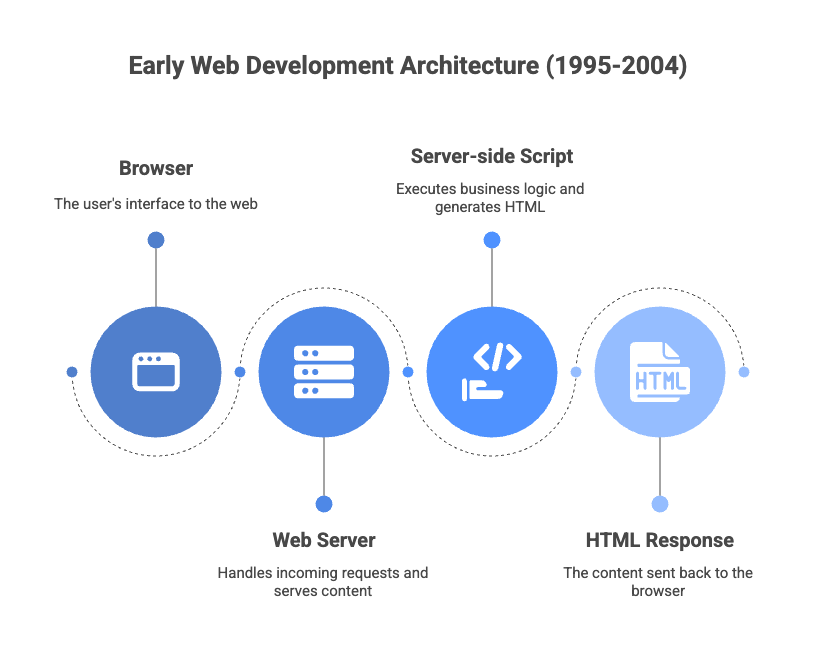
Characteristics
- Little to no standardization
- Security handled inconsistently
- Business logic mixed with presentation
- Scaling achieved through hardware, not architecture
During this period, languages functioned as frameworks. Choosing PHP, ASP, or JSP implicitly determined development style, deployment model, and scalability constraints.
The defining constraint of this era wasn’t performance or elegance—it was access. Developers optimized for what could be deployed cheaply, learned quickly, and explained easily to non-specialists. That bias toward immediacy would echo through every future framework generation.
This era established a recurring pattern: Tools that reduced setup friction gained adoption faster than tools optimized for correctness or rigor.
Era 2: Backend MVC Framework Wars (≈ 2004–2010)
Core problem: How do we structure growing web applications?
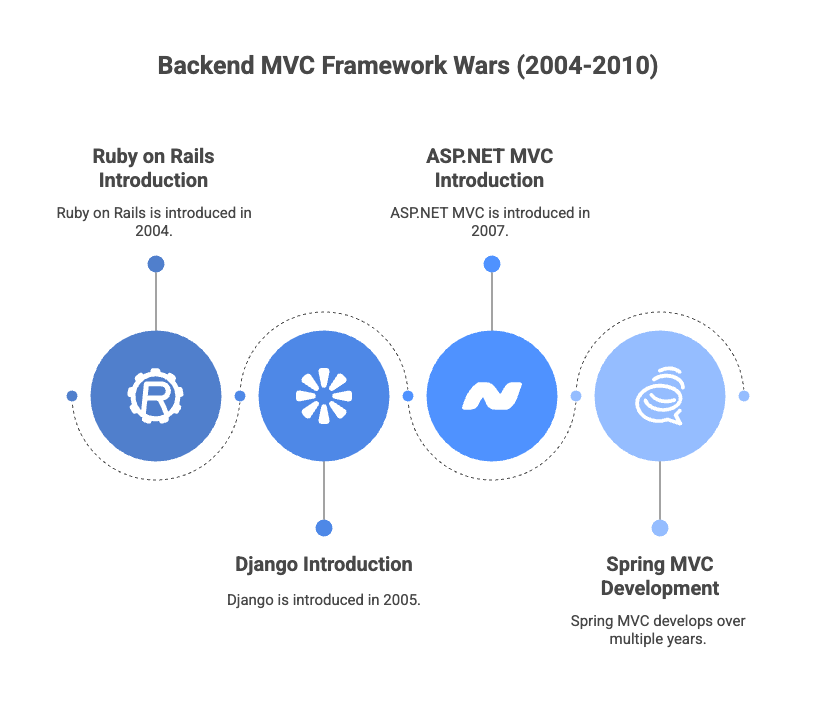
As applications expanded beyond simple pages, teams needed a consistent structure. Model–View–Controller (MVC) emerged as the dominant architectural pattern.
Major frameworks
- Ruby on Rails
- Django
- Spring (Java)
- Struts (Java)
- CakePHP
- CodeIgniter
- ASP.NET MVC
Key debates
- Convention over configuration vs explicit configuration
- Developer productivity vs long-term maintainability
- Framework opinionation vs flexibility
This era formalized:
- Separation of concerns
- Routing systems
- ORM usage
- Repeatable application structure
MVC frameworks transformed web development from ad hoc scripting into intentional software engineering.
This period also introduced a new idea: frameworks as opinions. Rails, Django, and Spring didn’t just provide structure—they encoded beliefs about how applications should be built. From this point forward, choosing a framework meant choosing a philosophy, not just a tool.
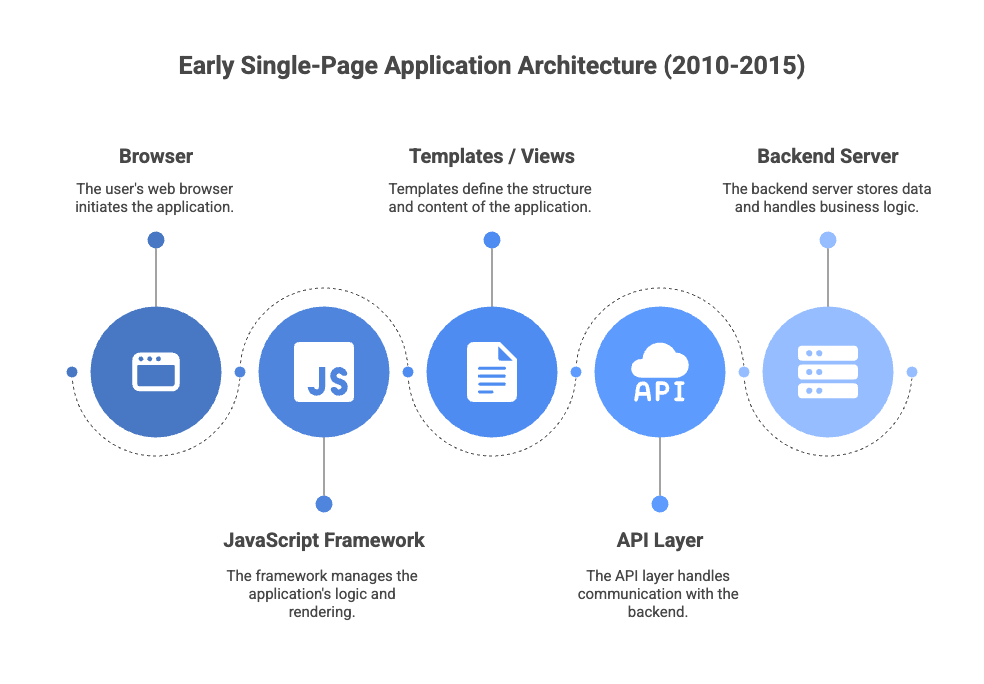
Era 3: Frontend JavaScript Framework Wars – Round One (≈ 2010–2015
Core problem: JavaScript applications became complex
The rise of single-page applications (SPAs) moved significant logic into the browser. JavaScript shifted from enhancement to primary runtime.
Major frameworks
- Backbone.js
- Ember.js
- Knockout
- AngularJS
Characteristics
- Client-side routing
- Template-driven views
- Two-way data binding
- Heavy reliance on build tooling
This period exposed the limits of unstructured JavaScript and introduced the first wave of frontend architectural complexity.
It also introduced tooling fatigue, as frontend stacks grew rapidly in both size and cognitive load. Many teams discovered that while SPAs solved UI complexity, they quietly shifted architectural risk into build pipelines, state synchronization, and long-term maintainability—areas few teams had planned for.
Era 4: Frontend JavaScript Framework Wars – Round Two (≈ 2015–2020)
Core problem: State management, performance, and scalability
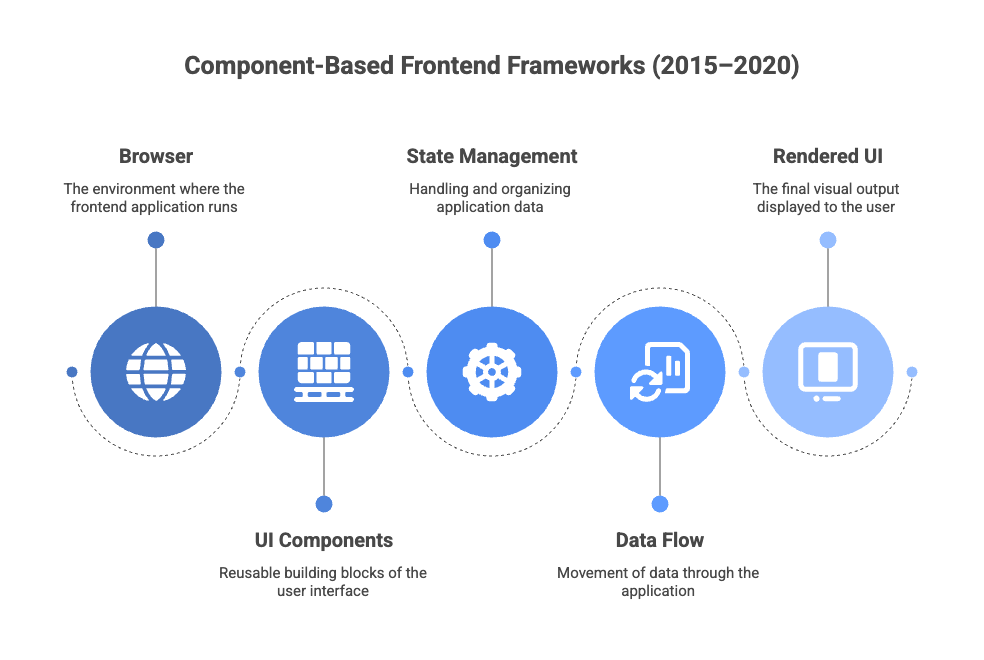
React introduced a component-driven model that reframed frontend architecture.
Major frameworks and tools
- React
- Angular (rewrite)
- Vue
- Redux
- MobX
- Webpack
- Rollup
- Parcel
Key shifts
- Component composition over templates
- Explicit state management
- One-way data flow
- Build tooling as a first-class concern
This era normalized the idea that frontend development is application development, not UI decoration. React’s real impact wasn’t technical—it normalized the expectation that frontend architecture deserves the same rigor as backend systems.
👋 What architectural challenge are you trying to solve?
Whether modernizing a legacy application, simplifying a tech stack, or planning what’s next, Curotec helps evaluate options and design the right architecture.
Trusted by tech leaders at:



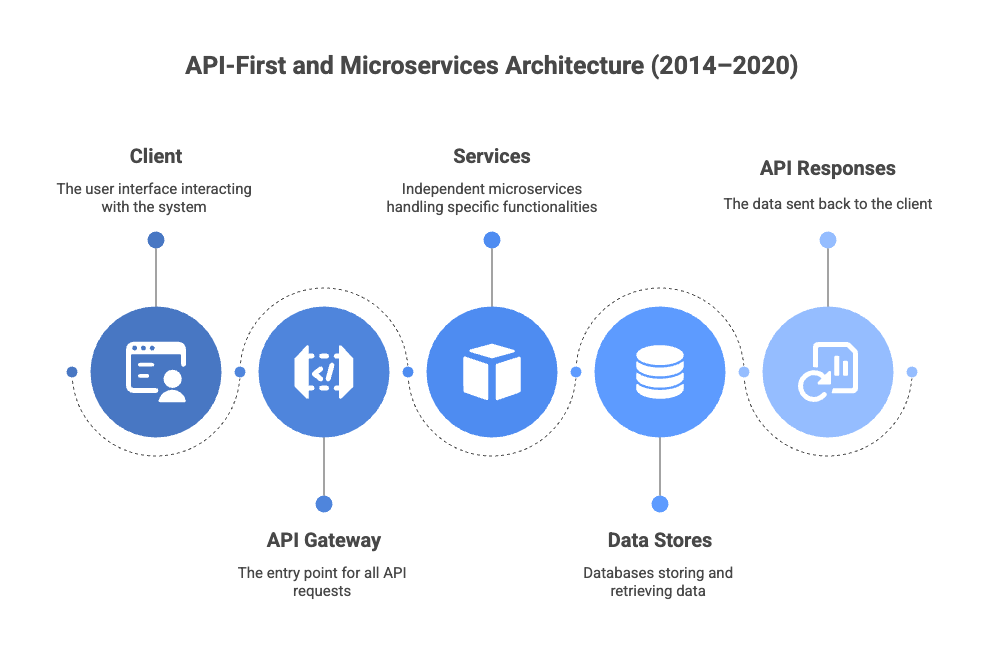
Era 5: Backend API & Microservices Wars (≈ 2014–2020)
Eras 4 and 5 overlap because frontend and backend architecture responded to different pressures at the same time.
As organizations scaled, architectural pressure shifted from code structure to organizational coordination.
Core problem: Scaling teams and systems independently
Major debates
- Monoliths vs microservices
- REST vs GraphQL
- Full-stack frameworks vs API-first design
In practice, microservices exposed a hard truth: architecture scales only as well as communication does. Teams that lacked operational maturity often replaced monolithic complexity with distributed confusion.
Key outcomes
- APIs became first-class products
- Infrastructure complexity increased
- Deployment pipelines grew more sophisticated
- DevOps practices became essential
Most organizations ultimately adopted hybrid architectures, balancing modularity with operational simplicity.
Era 6: Full-Stack Meta-Framework Wars (≈ 2019–2023)
Core problem: Shipping complete products with smaller teams
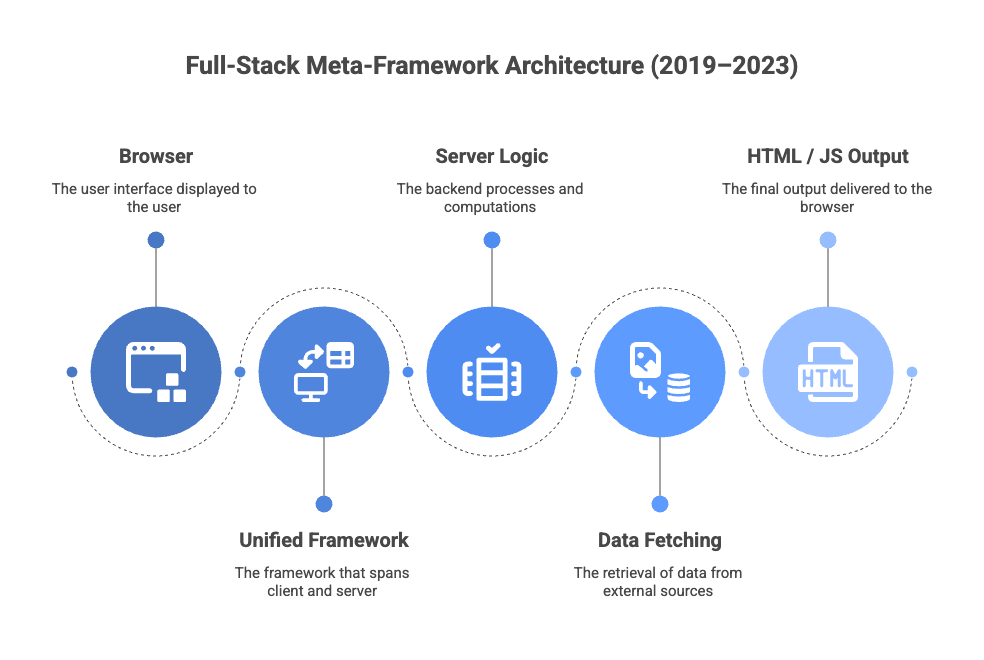
Meta-frameworks emerged to reduce architectural decision fatigue by providing standardized full-stack conventions.
Common features
- Integrated routing
- Server-side rendering (SSR)
- Static generation
- Opinionated data fetching patterns
- Tight deployment integration
This era marked a return to batteries-included frameworks, optimized for speed, performance, and developer onboarding. Meta-frameworks succeeded not because they were novel, but because they reduced decision overhead. In an ecosystem saturated with choice, consistency became a competitive advantage.
Era 7: Post-Framework & Toolchain Wars (≈ 2023–Present)
Core problem: Complexity collapse and performance ceilings
After decades of abstraction layering, developers began prioritizing simplicity, speed, and reduced configuration.
Emerging themes
- Faster build tools
- Smaller dependency graphs
- Alternative reactivity models
- Reduced runtime overhead
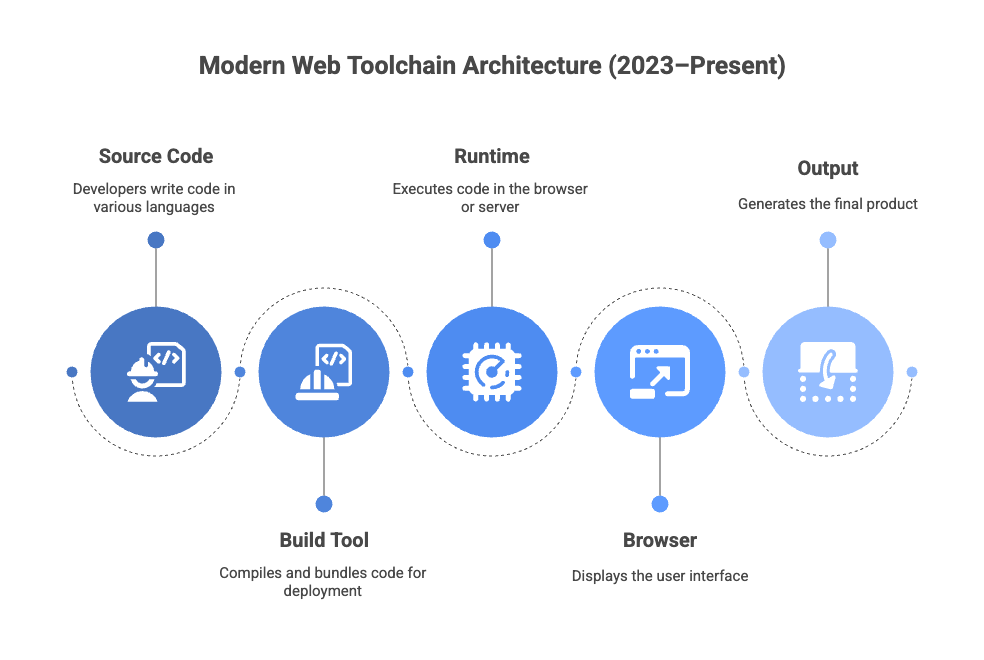
Rather than converging on a single approach, the ecosystem has diversified—supporting both highly integrated platforms and minimal, framework-light architectures. This era has not eliminated frameworks; it has made tradeoffs more explicit. Simplicity is now something teams must design for intentionally rather than assume.
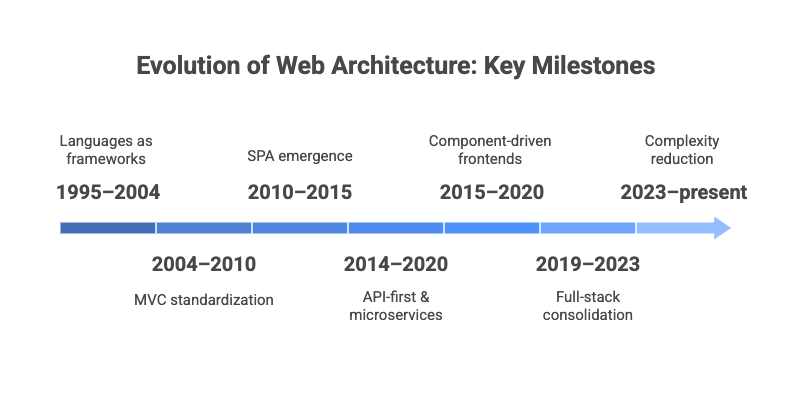
Several eras overlap because frontend and backend architecture evolved in parallel, responding to different pressures at the same time.
How to Use This History
- Don’t ask which framework won—ask which problem it solved
- Don’t copy solutions from teams operating at a different scale
- Don’t assume newer automatically means simpler
Key Takeaways Across All Eras
- Frameworks emerge in response to real constraints
- Adoption favors reduced friction over theoretical purity
- Complexity accumulates faster than it is removed
- Successful frameworks adapt or are replaced
- Most failures are due to context mismatch, not tooling
Understanding framework history is less about nostalgia and more about making better architectural decisions in the present.
Choosing Architecture Without Chasing Trends
A note from Curotec
Frameworks come and go, but architectural consequences last for years. The most expensive architecture mistakes are rarely obvious at the start—they emerge slowly, as teams, traffic, and expectations grow.
Curotec works with engineering and product teams to make deliberate framework and architecture decisions—grounded in real constraints, informed by historical context, and aligned with where the business is actually going. From monolith modernization to cloud-native platforms and full-stack consolidation, we help teams design systems that scale without unnecessary complexity.
If you’re evaluating your current stack or planning what comes next, the right conversation isn’t about what’s popular. It’s about what will still work five years from now. Start the architecture conversation.