Most software eventually outgrows its original design. A system that once ran smoothly can begin to feel heavy, slowing teams down as it expands. In the early days of software development, many companies built everything in a single monolithic application because it was the practical approach. Launching a product quickly was more important than long-term flexibility. The straightforward, reliable, and easy to manage monolithic model made that possible.
For a while, that simplicity paid off. Over time, however, growth brought more users, more integrations, and more data to handle. What used to make life easier started getting in the way. As organizations moved their workloads to the cloud, adopted agile delivery, and increased release frequency, the limits of the monolith became hard to ignore.
The shift to microservices isn’t just about new architecture. It’s about flexibility—the ability to change one part of a system without disrupting the rest. For most teams, that kind of independence is what drives speed, scalability, and innovation.
Why Monolithic Architectures Struggle to Keep Up
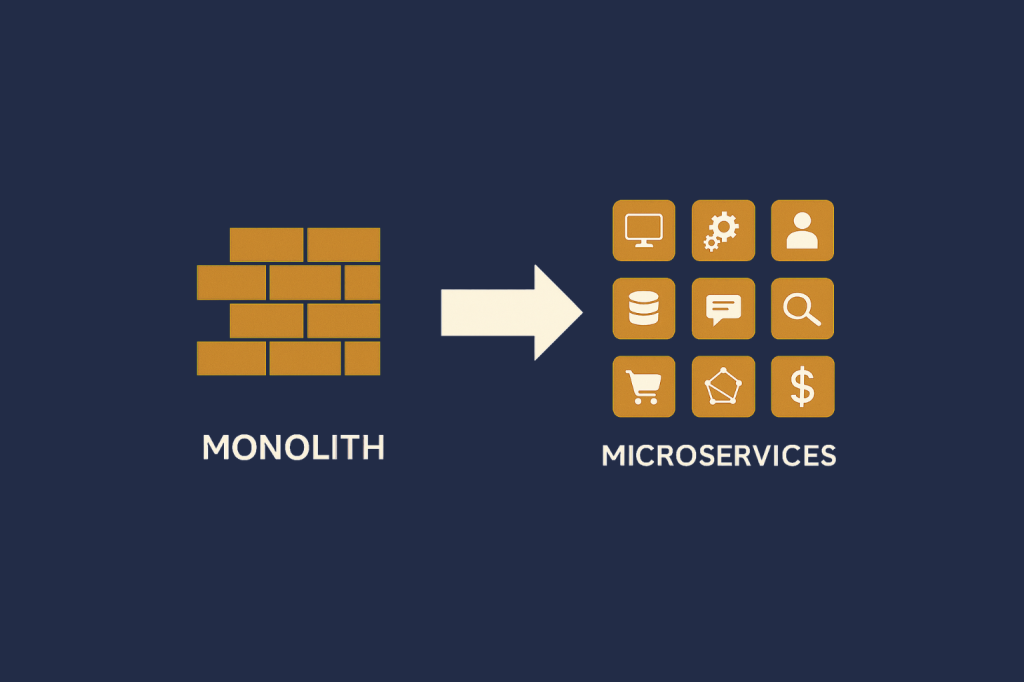
A monolithic application combines everything (e.g., user interface, business logic, and data access) into a single, tightly coupled codebase. In the early stages, it works beautifully. You can deploy quickly and fix issues in one place.
But over time, growth introduces friction:
- Release cycles slow down. A small change requires complete regression testing.
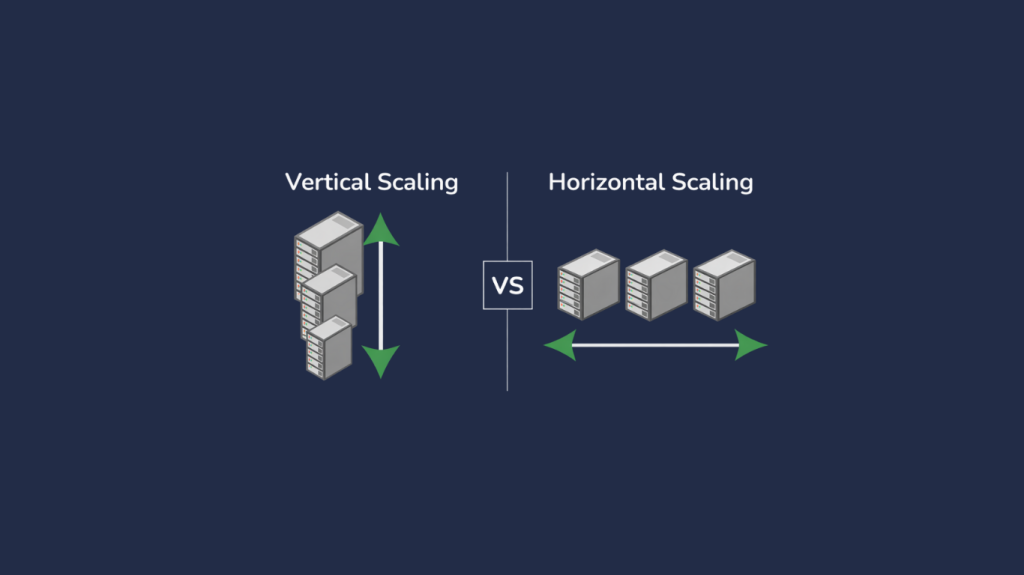
- Scaling becomes inefficient. You can’t scale one feature without scaling the entire application.
- Dependencies multiply. Teams spend more time avoiding side effects than building new features.
- Downtime risk increases. One bug can take the whole system offline.
In many enterprises, the monolith remains the backbone of core operations. It’s stable, proven, and deeply embedded in business workflows. The hard part isn’t deciding whether to modernize—it’s doing so safely while keeping systems online.
The Value of a Microservices Approach
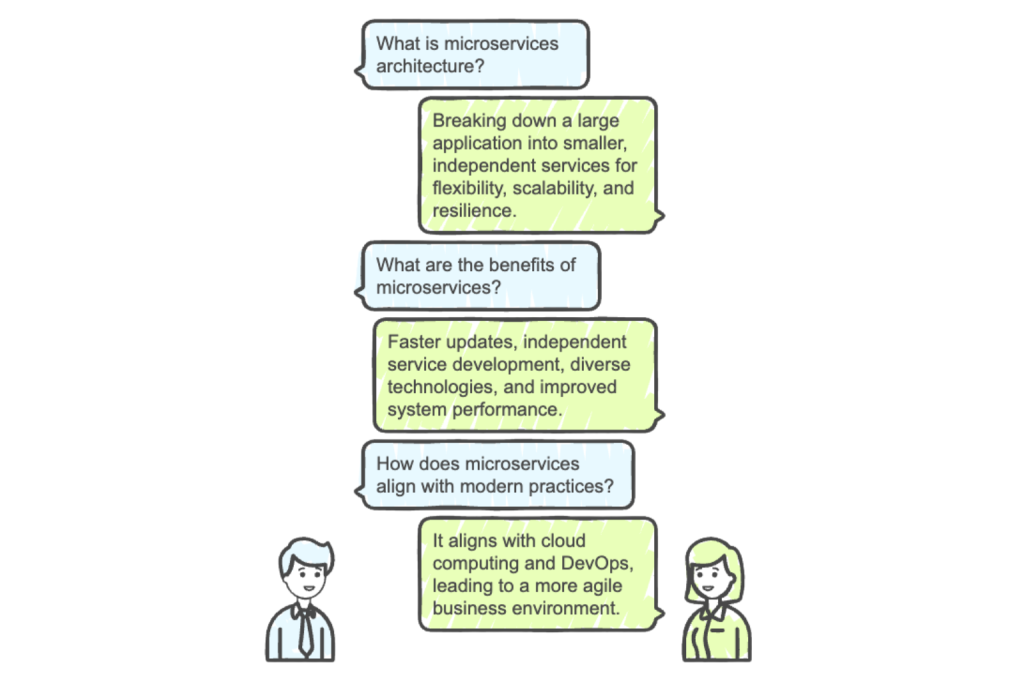
Microservices split an application into smaller, independent services that communicate through APIs. Each service focuses on a single business capability, such as authentication, billing, or notifications.
That separation delivers several benefits:
- Independent scaling. Increase capacity where needed without over-provisioning the rest of the system.
- Parallel development. Different teams can work on separate services simultaneously.
- Technology flexibility. Each service can use the language or framework best suited for its purpose.
- Fault isolation. A failure in one service doesn’t bring down the rest of the platform.
- Continuous delivery. Services can be deployed on their own cadence via automated CI/CD pipelines.
In short, microservices align well with agile practices and cloud infrastructure. They allow organizations to move fast without breaking everything in the process.
Is Your Organization Ready to Modernize?
Before you begin, it’s worth assessing both your technical and organizational readiness.
Technical signals that it might be time to evolve:
- The system receives frequent change requests in isolated areas
- Deployment cycles are slow or risky
- Scaling is difficult or costly
- Integrations with new tools require major rework
Infrastructure readiness includes:
- Clear, well-documented APIs
- The ability to containerize the application with tools like Docker
- Automated build and deployment pipelines
- Some familiarity with orchestration platforms such as Kubernetes or AWS ECS
Cultural readiness is equally important. Microservices thrive when teams own their services end to end—from development to production monitoring. If your process still depends heavily on handoffs and manual testing, strengthening DevOps practices is a good first step.
How to Transition: Proven Strategies
There’s no one right way to break down a monolith. The right approach depends on your system’s complexity, your risk tolerance, and your team’s experience.
1) The Big Bang Rewrite
Starting from scratch is tempting. In theory, it eliminates technical debt. In practice, it’s expensive, risky, and time-consuming. Business needs rarely stand still long enough for a complete rewrite to succeed. Unless your system is small or already unsustainable, this path usually causes more disruption than it’s worth.
2) The Strangler Fig Pattern
A more practical approach is gradual replacement. This method, known as the strangler fig pattern, is named after a tree that slowly grows around its host and eventually replaces it. The same idea applies to modernizing software: you rebuild the system piece by piece instead of all at once.
We covered this in detail in our recent post on Modernizing a Legacy Application with the Strangler Fig Pattern, but here’s a quick overview of how it works:
- Identify a specific business domain—something self-contained like authentication, billing, or reporting.
- Build a new microservice that handles that functionality.
- Route traffic for that domain from the monolith to the new service through an API gateway.
- Repeat the process gradually, peeling off more functionality until the legacy system is fully replaced.
This approach minimizes risk, keeps the system operational, and allows modernization to deliver value continuously rather than all at once.
3) Hybrid or Intermediate Models
Some teams take a simple first step by containerizing the monolith. It doesn’t turn the system into microservices overnight, but it does make deployment and scaling less painful. Others choose to build an API layer on top of the existing app so newer components can talk to it more cleanly. That kind of hybrid setup buys time—and room to think—while the broader modernization plan takes shape.

👋 How can you modernize without disrupting operations?
Curotec helps teams modernize while keeping systems running.
Trusted by tech leaders at:



Common Challenges and How to Manage Them
Data Management
In monolithic systems, all components share one database. Microservices work best when each service has its own data store, which can lead to challenges with synchronization and consistency. Event-driven design and message brokers such as Kafka or RabbitMQ help manage this by broadcasting state changes between services.
Service Communication
Moving from in-memory calls to network calls changes everything. The distance between services adds latency and creates new failure points. Engineers often turn to asynchronous messaging, retry logic, or circuit-breaker patterns to keep things running smoothly when requests don’t behave as expected.
Security
Keeping authentication and authorization consistent across dozens of services can be tricky. Most teams solve it by centralizing identity through OAuth 2.0 or OpenID Connect and routing traffic through an API gateway, which enforces the same security rules everywhere.
Observability
Once you move to distributed systems, visibility becomes critical. Use centralized logging and tracing tools such as Prometheus, Grafana, or the ELK Stack to track performance across services. OpenTelemetry and Jaeger are often used to trace end-to-end user requests.
Team Alignment
Microservices only work when teams work together. Developers, operations, and QA all need to see the same picture—builds, releases, incidents, and everything in between. When that visibility breaks down, the system does too, and what was meant to be autonomy quickly turns into confusion.
Tools and Frameworks That Make Modernization Easier
You don’t need every new tool that comes along. The teams that modernize successfully usually focus on a few proven technologies that deliver real value:
- Containerization: Docker for packaging and isolating applications
- Orchestration: Kubernetes, AWS ECS, or Azure AKS for managing deployments
- API Gateways: Kong, Apigee, or NGINX for routing and authentication
- CI/CD: GitHub Actions, GitLab CI, or Jenkins for continuous integration and deployment
- Monitoring: Prometheus, Grafana, Datadog, or New Relic for performance tracking
- Service Mesh: Istio or Linkerd for managing secure communication between services
It’s not about how many tools you use but how well they work together. The best stack supports automation, visibility, and scaling while keeping your day-to-day workflow predictable and straightforward.
Best Practices for a Smooth Transition
- Start small and focused. Pick a service that has clear boundaries and measurable business value.
- Automate early. Establish CI/CD pipelines before scaling out.
- Use APIs as contracts. Stable interfaces reduce dependencies and simplify collaboration.
- Separate data carefully. Give each service ownership of its schema and storage.
- Monitor both system health and business impact. Technical success is meaningless without customer benefit.
- Iterate, don’t rush. Modernization works best as a continuous improvement process.
Why Modernization Pays Off
When the transition is done well, the payoff is immediate and long-term.
Tangible benefits
- Faster deployments and shorter feedback loops
- Improved reliability and uptime
- Cost-efficient scaling that matches demand
- Reduced maintenance burden over time
Cultural and strategic gains
- Developers gain autonomy and pride of ownership
- Innovation speeds up because experimentation is safer
- The organization can adopt new tools or frameworks with minimal disruption
Once the first few microservices go live, teams gain confidence. Each success reinforces the next, and soon the entire development process becomes faster and more predictable.
Modernizing from a monolith to microservices isn’t a single project. It’s a mindset shift that balances technical progress with business continuity. The real goal is agility: to evolve without breaking what already works.
Whether you begin by containerizing your application, implementing the strangler fig pattern, or building new features as standalone services, progress matters more than perfection. Each small step lays the foundation for faster delivery, greater resilience, and long-term scalability.
Need help breaking down your monolith?
Curotec helps organizations modernize safely and efficiently, guiding teams through every phase from architecture planning to full implementation. Let’s talk about your modernization strategy.