AI has been circling Laravel projects for a while now, but mostly from the outside.
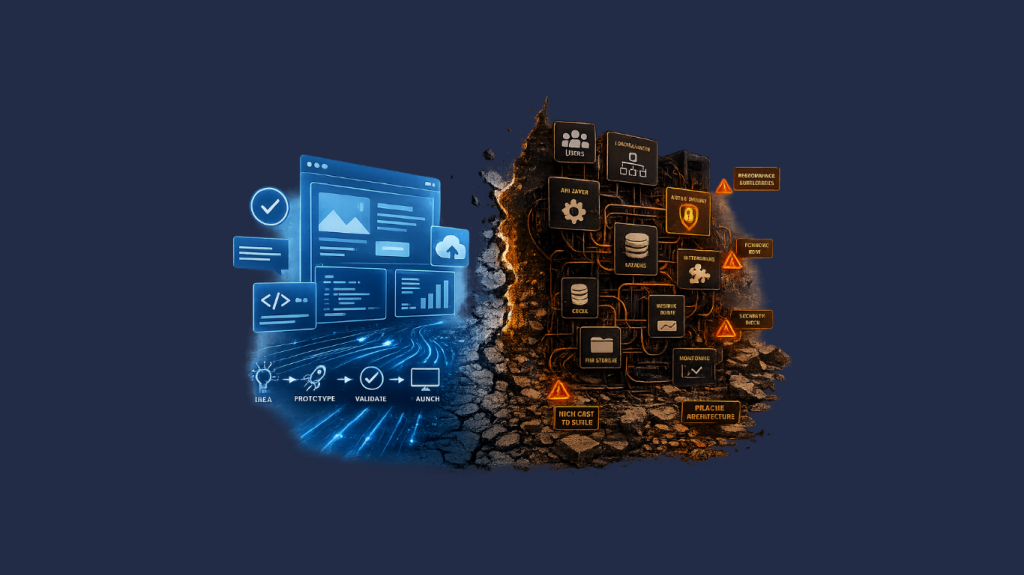
Teams experiment with APIs, wire up a few endpoints, maybe ship a chatbot, and then quietly realize it doesn’t really belong anywhere in the application. It feels bolted on. Hard to maintain. Even harder to scale.
That’s starting to shift.
As the Laravel AI SDK moves toward stability, with native vector support and emerging MCP integrations, AI is beginning to settle into Laravel the way queues, jobs, and events did years ago. Not as an add-on, but as part of the architecture.
And that changes how you build. It also changes how teams approach broader AI/ML development services, where the goal is no longer experimentation but building something that holds up in production.
What the Laravel AI SDK Actually Introduces
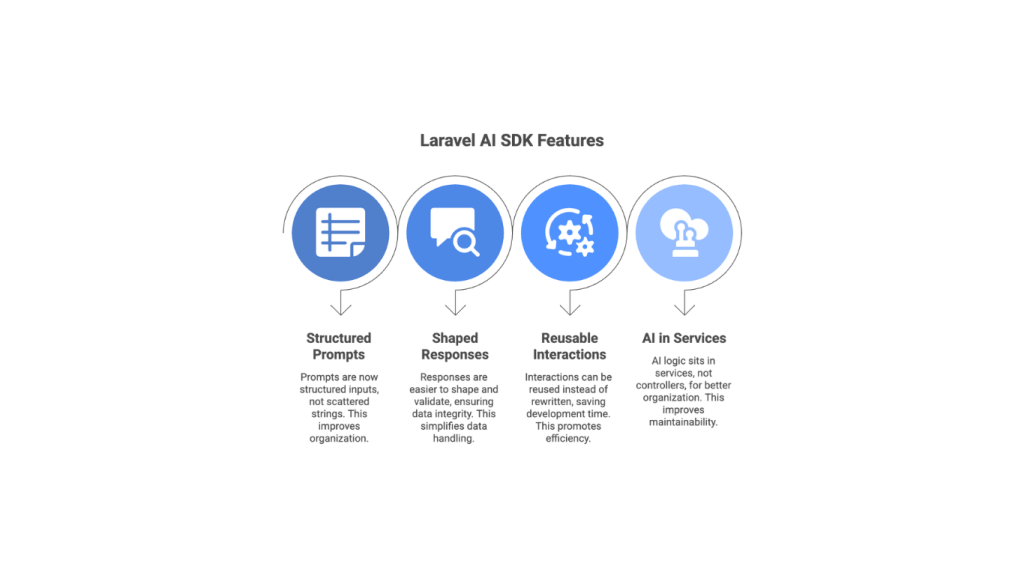
At a glance, it’s easy to assume the AI SDK is just a cleaner way to call APIs like OpenAI. In practice, it goes further than that. It introduces a consistent layer for how Laravel applications interact with language models:
- Prompts become structured inputs instead of scattered strings
- Responses are easier to shape and validate
- Interactions can be reused instead of rewritten
- AI logic sits in services, not controllers
That last point matters more than it sounds. Most early AI integrations ended up tangled in request-handling logic. It worked at first, then became difficult to reason about.
The SDK is Laravel’s way of standardizing that layer before it turns into long-term friction.
Why This Is Different from Basic Laravel OpenAI Integration
If you’ve already integrated AI into a Laravel app, you’ve probably done something like this:
- Call an API directly
- Build prompts inline
- Parse whatever comes back
- Repeat the process elsewhere
It’s fast. It’s also fragile.
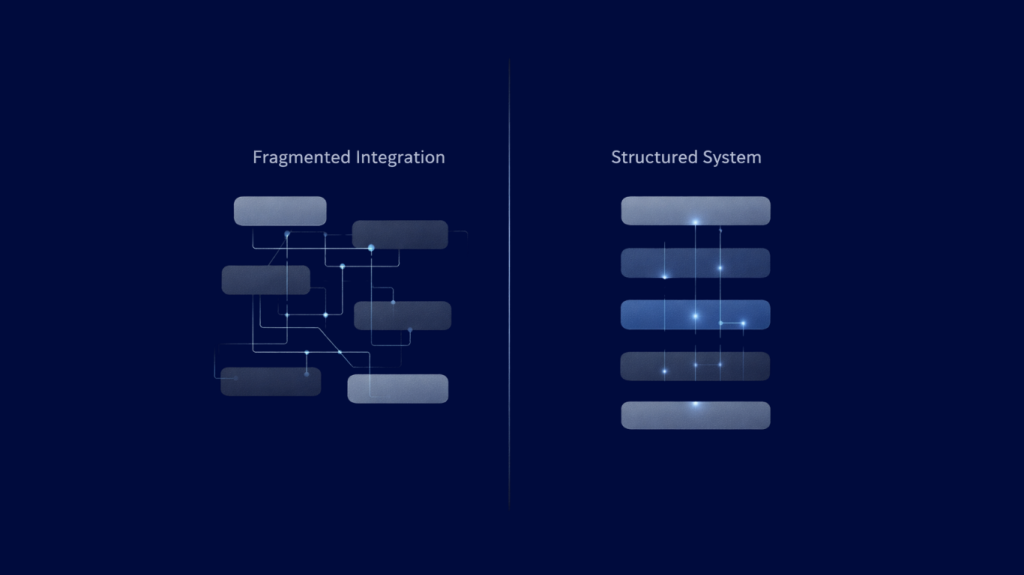
The difference with the AI SDK isn’t just cleaner syntax. It’s the shift toward treating AI interactions as part of your system design. Instead of scattering logic, you:
- Centralize how prompts are built
- Standardize how responses are handled
- Create patterns that can evolve over time
That reduces the kind of invisible complexity that tends to show up later, when multiple teams start touching the same AI workflows.
Vector Support Changes What Laravel Apps Can Do
This is where things move from “interesting” to actually useful.
Without retrieval, most AI features rely entirely on prompts. That means responses are generic, sometimes impressive, but rarely grounded in your application’s data.
Vector support changes that.
Now you can store embeddings and perform semantic search directly within your application flow, something that’s becoming increasingly common in modern
That opens the door to:
- knowledge bases that actually reflect internal data
- support assistants that pull from real documentation
- search experiences that understand intent, not just keywords
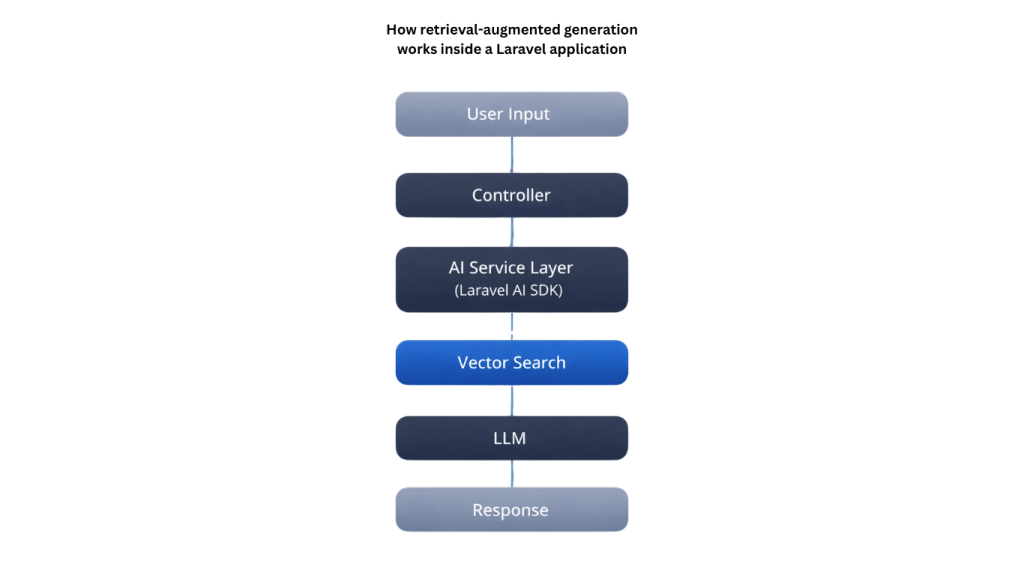
More importantly, it enables retrieval-augmented generation. Instead of asking a model to guess, you give it context.
That one shift tends to separate experiments from production systems.
MCP Integration Isn’t About Autonomy
There’s been a lot of noise around agents and autonomous systems. MCP integration is often brought up in that conversation, but it’s worth grounding what it actually does.
At its core, MCP provides a structured way for AI systems to interact with tools and services. In a Laravel context, that means your application can:
- Expose capabilities to an AI system in a predictable way
- Participate in larger workflows across systems
- Avoid building one-off orchestration layers from scratch
It doesn’t make your app autonomous. It makes it interoperable.
That’s a more practical step forward.
Building an AI-Powered Laravel App Without Creating a Mess
The temptation is to start with the model. In most cases, that’s backwards.
It’s more effective to think about structure first, the same way you would approach any modern application development project where long-term maintainability matters as much as initial speed.
Start with the role AI should play
Is it assisting a user, automating a task, or making a recommendation? If that’s unclear, the implementation usually drifts.
Get your data in order
AI is only as useful as the context it has access to. That means:
- Clean, well-defined data sources
- Clear boundaries around what gets indexed
- A plan for how context is retrieved
Introduce the AI layer intentionally
With the SDK, this typically means:
- Creating a dedicated service layer
- Defining reusable prompt structures
- Keeping controllers thin
Add retrieval early, not later
Many teams treat retrieval as an enhancement. In practice, it’s foundational. Combining vector search with model responses ensures outputs are tied to real data rather than just probabilities.
Plan for async work
AI calls aren’t always fast.
Using Laravel queues keeps the application responsive and avoids tying user experience to model latency, something that becomes especially important as systems scale in more complex cloud environments.
Expect iteration
No AI feature is “done” on the first release. You’ll refine prompts, adjust context, and introduce guardrails as patterns emerge.
That’s normal.
Use Cases That Actually Hold Up in Production
The most effective implementations look less like demos and more like extensions of existing workflows. A few that consistently work:
- Internal tools that summarize operational or reporting data
- Content workflows where AI drafts but humans approve
- Admin interfaces that help teams move faster without exposing complexity
- Customer-facing assistants that pull from product or support data
What they have in common is context. They’re grounded in something real.
👋 How could AI fit into your existing Laravel application without disrupting what already works?
Curotec helps teams identify where AI adds real value, then integrates it into existing Laravel systems using structured, maintainable approaches like the Laravel AI SDK.
Trusted by tech leaders at:



Where Teams Tend to Go Off Track
Most issues don’t come from the model itself. They come from how it’s used. A few patterns show up repeatedly:
- Treating AI as a feature instead of a capability
- Skipping retrieval and relying entirely on prompts
- Embedding logic directly in controllers
- Underestimating latency and cost
- Expecting autonomy where orchestration is required
None of these breaks things immediately. They just create systems that are harder to evolve.
Architectural Considerations That Show Up Quickly
Once AI moves past the experimentation phase, a different set of concerns starts to surface. Not all at once, but fast enough that you feel the shift.
Performance is usually the first pressure point. AI calls introduce latency in places that didn’t have it before, which makes queueing and selective caching less of an optimization and more of a requirement.
Cost follows close behind. Token usage is easy to ignore in early testing, but once it’s tied to real usage, it becomes something you have to actively manage. Small inefficiencies add up quickly at scale.
Security also gets more complicated. It’s no longer just about validating inputs. You have to think carefully about what data is being sent to a model, what context is included, and how responses are handled on the way back.
Then there’s maintainability, which tends to creep in over time. When AI logic is spread across controllers, jobs, and services without a clear pattern, even simple changes become harder than they should be.
This is where structure starts to matter. A defined AI layer, like the one the Laravel AI SDK encourages, doesn’t just make things cleaner. It makes them easier to evolve without constantly reworking the foundation.
How This Fits into Laravel’s Direction
Laravel hasn’t really been a “just CRUD” framework for a while now. Over time, it’s grown into something that can handle far more dynamic, event-driven systems without forcing developers to step outside the ecosystem.
Features like queues, events, and real-time broadcasting didn’t arrive all at once, but each one pushed Laravel a little further in that direction. You could start to build more complex behavior without stitching together a collection of external tools.
AI fits into that same evolution.
What’s changing isn’t just that you can integrate AI. It’s that Laravel is starting to give it a more natural place inside the application itself, rather than treating it as something that lives off to the side.
That doesn’t suddenly make AI straightforward. It just makes it easier to work with in a way that feels consistent with the rest of the framework.
When Laravel AI SDK Makes Sense
Not every application benefits from this. It tends to work best when:
- There’s meaningful data to work with
- Workflows benefit from interpretation or summarization
- Responses need to adapt based on context
It’s less useful when:
- The application is mostly static
- Logic needs to be strictly deterministic
- There’s no real data layer to ground responses
The difference comes down to whether AI is solving a real problem or just adding novelty.
A More Practical Way to Think About It
The Laravel AI SDK isn’t about adding intelligence to an application in a broad sense. It’s about making AI interactions predictable enough to live inside your system without creating long-term complexity.
That’s the real shift.
Not smarter outputs. More structured systems.
Curotec works with teams to introduce AI in a controlled way, layering it into existing Laravel systems using patterns like the AI SDK to add value without creating unnecessary complexity.
AI in Laravel isn’t experimental anymore, but it’s not plug-and-play either.
The difference between something useful and something fragile usually comes down to how it’s structured, where the logic lives, how data is handled, and how outputs are controlled.
Those decisions are harder to unwind later.
If you’re thinking about introducing AI into a Laravel application and want to do it in a way that holds up over time, it’s worth having that conversation early. Contact Curotec to explore how to integrate AI into your Laravel systems without adding unnecessary complexity.