
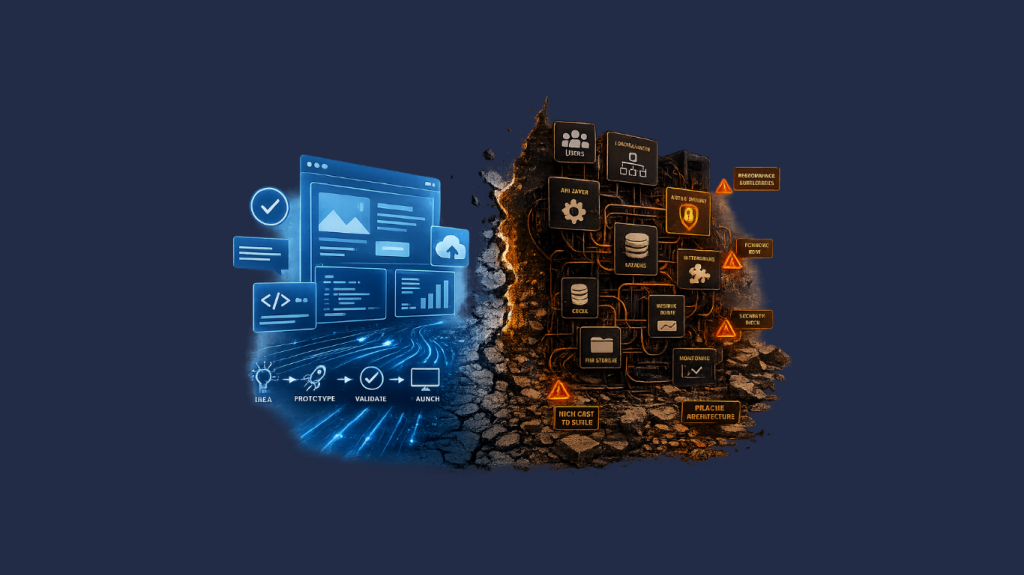
The rise of AI-powered development tools has dramatically changed how software gets built. Platforms like Lovable, Bolt, Replit, and similar prompt-driven development environments allow founders, product teams, and business stakeholders to create working applications in days instead of months. Features that once required engineering teams, sprint planning, and significant budgets can now be generated through natural language prompts.
For many organizations, this shift is transformative. Teams can validate ideas faster, gather user feedback earlier, and reduce the risk of investing heavily in concepts that may never gain traction. The ability to move from idea to functioning prototype with unprecedented speed has opened the door to innovation for businesses that previously lacked the resources to build custom software.
But there is an important distinction that often gets overlooked.
A prototype that works is not necessarily software that can scale.
Many organizations experience a similar pattern. An AI-generated application gains traction, attracts users, and begins solving real business problems. What started as an experiment suddenly becomes an important operational tool. The application is successful—and that success exposes challenges that were never visible during development.
Performance issues emerge. Data structures become strained. Security concerns surface. New features take longer to implement. What appeared to be a finished product begins revealing the hidden costs of the AI-tooling that made it possible to build so quickly.
This is not a criticism of AI-assisted development. In fact, vibe coding is proving to be one of the most effective ways to validate software ideas. The challenge is understanding where validation ends and engineering begins.
What Is Vibe Coding and Why Is It So Popular?
The term “vibe coding” has become shorthand for building applications through prompts rather than traditional software development processes. Instead of writing every line of code manually, users describe what they want, and AI tools generate interfaces, workflows, databases, and application logic.
The appeal is obvious.
A founder with a product idea can build a functional proof of concept without hiring a development team. A business analyst can automate internal workflows. A startup can launch an MVP in a matter of days rather than spending months building a first version.
For organizations exploring new products or services, this dramatically lowers the cost of experimentation.
Historically, businesses had to make significant investments before they could determine whether an idea had market demand. Today, they can launch a working application, gather feedback, and make informed decisions based on real user behavior.
That is a remarkable advantage.
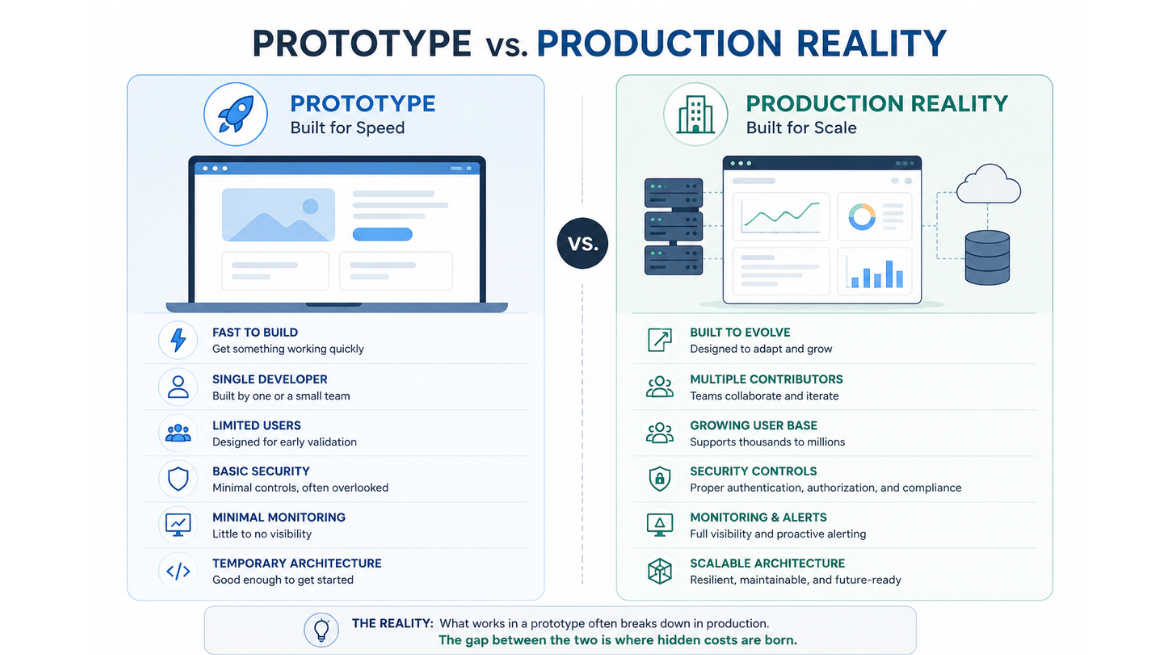
The problem is that most AI-generated applications are optimized for one objective: producing a working result as quickly as possible.
Production software requires a very different set of priorities.
Reliability, maintainability, scalability, security, observability, and performance are often secondary concerns during prototype development. They become critical only after users begin depending on the system.
Unfortunately, that is usually when organizations discover the gap between a successful prototype and a production-ready platform.
The Prototype Trap
One of the most common misconceptions in software development is the belief that a successful prototype is simply a smaller version of a successful production system.
In reality, the two serve completely different purposes.
A prototype exists to answer a question: Does this idea solve a real problem?
A production application exists to answer a different question: Can this solution continue delivering value reliably as the business grows?
Those objectives lead to very different engineering decisions.
A prototype can tolerate inefficiencies because its user base is small. It can survive occasional errors because expectations are limited. It can rely on simplified workflows because edge cases have not yet appeared.
As adoption increases, those assumptions begin to break down.
A database query that performs well with a hundred records may struggle with hundreds of thousands. Authentication methods that seemed sufficient for internal testing may not satisfy customer security requirements. A workflow that seemed to work perfectly may actually be mismanaging records on the back-end.
Ironically, these problems often emerge at the moment the business considers the project a success.
The application gains users, revenue, or operational importance, and suddenly the decisions made during rapid development begin limiting future growth.
This is where many organizations discover that the cost of moving quickly was not eliminated. It was simply deferred.
Hidden Cost #1: Technical Debt Compounds Quickly
Technical debt is often misunderstood as bad code.
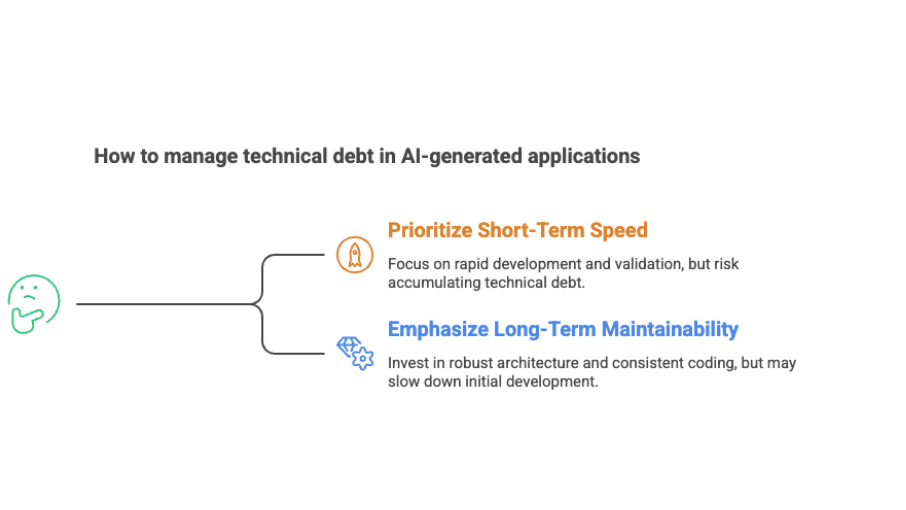
In reality, technical debt is any decision that prioritizes short-term speed over long-term maintainability.
That tradeoff makes perfect sense during the prototype phase. Speed matters. Learning matters. Validation matters.
However, AI-generated applications frequently accumulate technical debt at a much faster rate than traditionally engineered systems.
Large language models are designed to generate solutions that work. They are not responsible for creating long-term architectural consistency across an application.
As a result, organizations often discover duplicated business logic, inconsistent coding patterns, tightly coupled components, and unnecessary dependencies. None of these issues are immediately visible when the application is first launched.
The software functions. Users are happy. The prototype appears successful.
The problems emerge later when teams attempt to extend the platform.
Features that should take days require weeks. Small changes create unexpected side effects. New developers struggle to understand how components interact with one another.
At that point, the conversation shifts from innovation to maintenance.
Instead of building new capabilities, teams spend increasing amounts of time managing complexity that accumulated during the application’s early stages.
Technical debt rarely appears in a demo. It becomes visible only when organizations begin investing in long-term growth.
Hidden Cost #2: Data Models That Don’t Scale
Many prototype applications are built around immediate functionality rather than long-term data strategy.
During early development, that approach is often acceptable. The goal is to get information into the system and create a working experience for users.
The challenge emerges as the volume of data grows.
Applications that were designed around convenience frequently lack optimized relationships, indexing strategies, and efficient query patterns. Reports become slower. Search functions take longer to execute. User-facing performance begins to suffer.
In some cases, the database itself becomes the primary bottleneck.
What makes these issues particularly difficult is that they often remain invisible until a critical growth milestone is reached. The application may perform flawlessly for months before suddenly experiencing noticeable degradation.
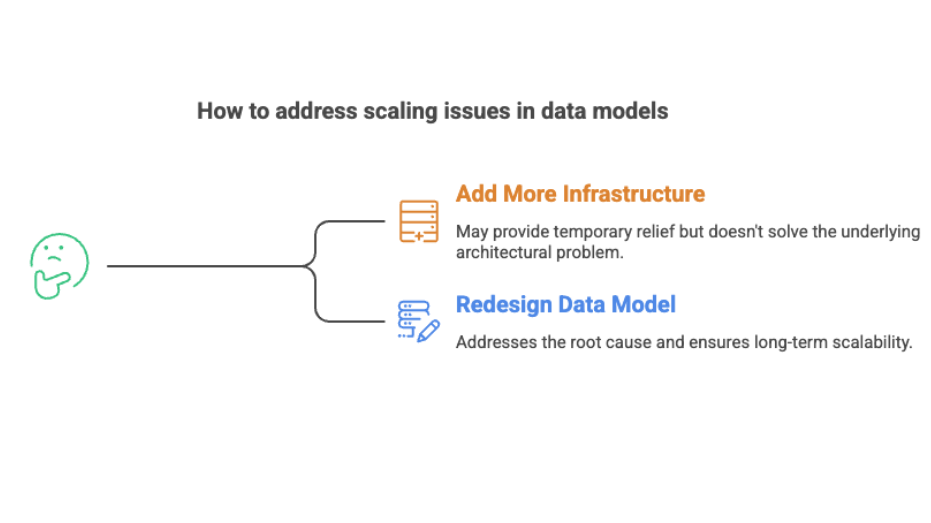
Organizations frequently assume they need more infrastructure to solve the problem. In reality, the underlying issue is often architectural.
Poor data design cannot be permanently solved with larger servers.
At a certain point, the application’s data model must be redesigned to support the volume and complexity of information it now manages.
👋 What concerns do you have about taking your prototype into production?
Curotec helps organizations evaluate architecture, scalability, and technical debt before growth turns small issues into major obstacles.
Trusted by tech leaders at:



Hidden Cost #3: Missing Application Architecture
There is an important difference between code and architecture.
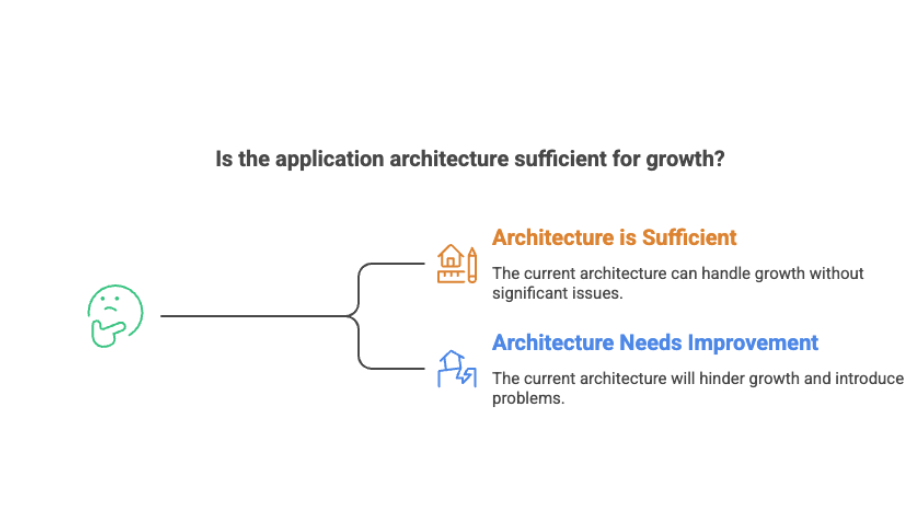
Code determines how a feature works.
Architecture determines how the entire system evolves.
Many AI-generated applications perform well at the feature level. The user interface functions correctly. Data can be created and updated. Business workflows operate as intended.
The challenge is that production systems require far more than individual features.
They require clearly defined boundaries between services. They require strategies for handling asynchronous processes. They require approaches for integrating external systems, managing state, monitoring performance, and handling failures gracefully.
These architectural concerns may seem unnecessary when an application has only a few users.
They become essential when hundreds or thousands of users depend on the platform.
Without a solid architectural foundation, growth introduces increasing friction. Performance declines, deployments become riskier, and new features become more difficult to deliver.
Organizations often interpret these symptoms as signs that they have outgrown their infrastructure.
In reality, they may have outgrown their architecture.
Hidden Cost #4: Security and Compliance Gaps
Security is rarely the primary concern during prototype development.
That is understandable. The objective is to validate an idea, not complete an enterprise security audit.
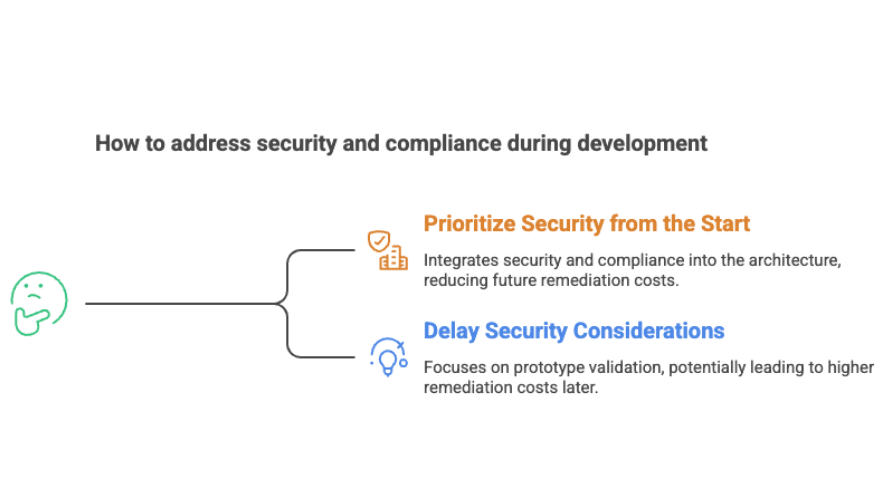
However, applications that begin as internal experiments frequently evolve into customer-facing platforms or business-critical systems.
When that transition occurs, security requirements change dramatically.
Questions that were previously ignored become impossible to avoid.
How are user permissions managed?
How are secrets stored?
What happens if credentials are compromised?
Can access be audited?
Are sensitive records protected appropriately?
For organizations operating in regulated industries, the requirements become even more demanding. Healthcare, financial services, and enterprise software providers often face compliance obligations that extend well beyond basic security controls.
The challenge is that compliance cannot simply be layered onto an application at the last minute.
Many compliance requirements depend on architectural decisions that must be considered from the beginning.
The longer those decisions are delayed, the more expensive remediation becomes.
Hidden Cost #5: Platform Limitations and Rebuild Risk
Most vibe-coded applications begin life inside a specific platform ecosystem.
That ecosystem provides tremendous value during the early stages of development. It accelerates creation, simplifies deployment, and reduces technical complexity.
Eventually, however, organizations may encounter limitations.
Custom integrations become difficult. Infrastructure flexibility becomes restricted. Performance optimization options become limited. Unique business requirements exceed the capabilities of the platform.
At that point, teams face a difficult decision.
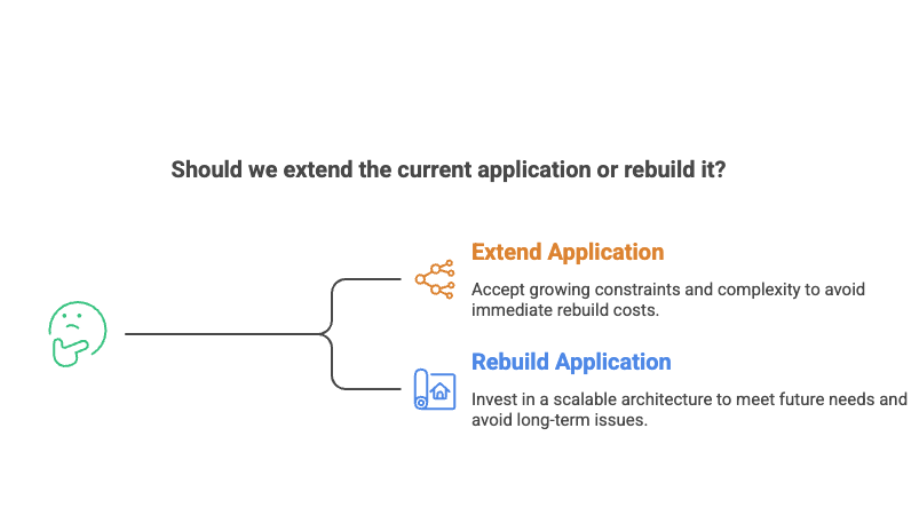
Should they continue extending the original application and accept growing constraints?
Or should they rebuild portions of the system using a more scalable architecture?
Neither option is ideal.
Organizations that postpone modernization often accumulate additional complexity. Organizations that wait too long may discover that a full rebuild has become unavoidable.
This is why many successful companies eventually transition from prototype-oriented platforms to custom-engineered solutions.
The prototype succeeded. The business simply outgrew the environment that helped create it.
When Is It Time to Move Beyond Vibe Coding?
There is no universal timeline.
Some applications remain effective for years with minimal changes. Others reach their limits within months.
However, several indicators consistently signal that an organization has entered a new stage of maturity.
- Customers depend on the platform daily
- Revenue flows directly through the application
- User growth is accelerating
- Multiple developers need to contribute
- Security reviews are becoming more frequent
- Performance concerns are emerging
- New features take significantly longer to implement
When these conditions appear, the conversation should shift from building quickly to building sustainably.
That does not mean abandoning AI-assisted development.
It means recognizing that the application has become too valuable to rely solely on rapid-prototyping practices with AI tools.
A Better Approach: Prototype Fast, Then Build for Scale
The most successful organizations are not choosing between vibe coding and traditional engineering.
They are using each approach at the appropriate stage.
First, they validate.
AI-powered development tools help them test assumptions, gather feedback, and identify opportunities with minimal risk.
Next, they assess.
They evaluate technical debt, review security controls, analyze scalability requirements, and identify architectural limitations.
Then, they modernize.
Critical components are redesigned. Data models are optimized. Infrastructure is aligned with long-term business objectives.
Finally, they scale.
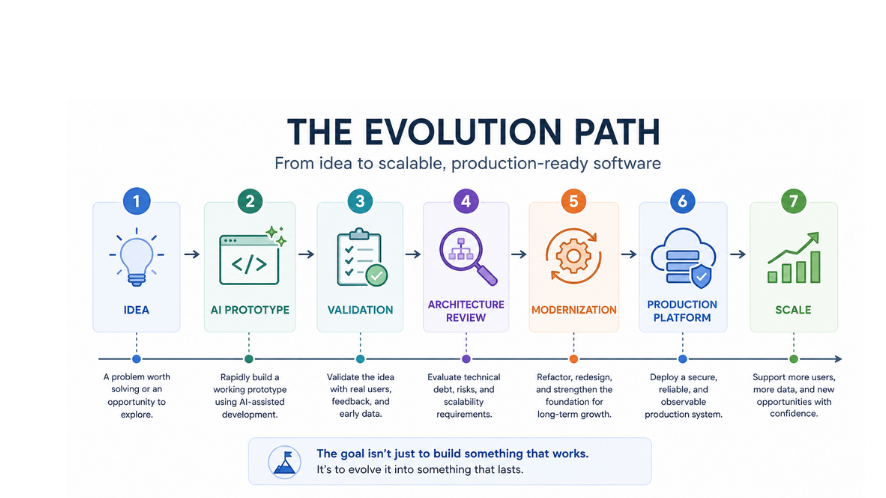
Monitoring, performance optimization, governance, and operational maturity become part of the software lifecycle.
This approach preserves the speed benefits of modern AI development while avoiding the risks associated with relying on a prototype indefinitely.
Vibe coding is changing how software begins.
Ideas that once required months of development can now be tested in days. Organizations can validate opportunities faster than ever before. Entrepreneurs can bring concepts to life without waiting for extensive development cycles.
That is an extraordinary advancement.
But successful software is defined by more than how quickly it launches.
As applications become critical to business operations, architectural quality, maintainability, security, and scalability matter just as much as initial development speed.
A working prototype proves an idea is worth pursuing.
Production-ready software ensures the business can capitalize on that opportunity for years to come.
Your prototype proved the idea. Now it’s time to ensure the software can support the business. Contact Curotec to evaluate your architecture, address scalability challenges, and build a foundation for long-term growth.