If you’ve ever sat in a meeting where three people all thought they “owned” the same decision, there’s a good chance these roles were involved.
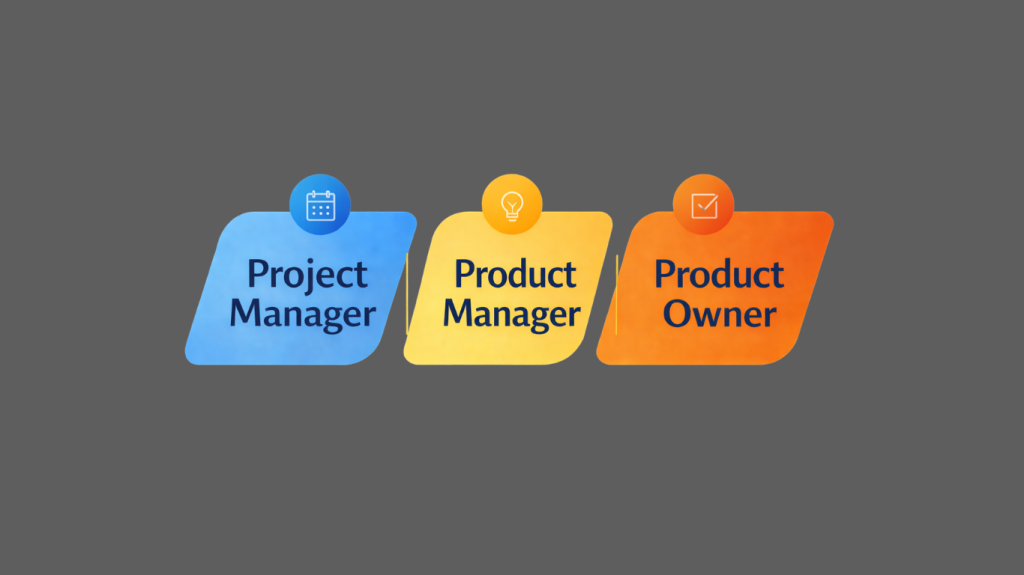
Project Manager, Product Manager, and Product Owner are some of the most commonly confused titles in software and digital product teams. Sometimes they’re used interchangeably. Sometimes one person is expected to do all three. And sometimes companies hire the wrong role entirely, then wonder why delivery feels chaotic, or strategy feels fuzzy.
The truth is simple: these roles exist to solve different problems. When they’re clearly defined, teams move faster and argue less. When they’re blurred, ownership breaks down and progress stalls.
This post breaks down what each role actually does, where responsibilities overlap, and how to tell which one your team really needs.
Why These Roles Get Confused
Part of the confusion comes from history. As software teams evolved from waterfall to Agile, responsibilities shifted. New titles emerged. Old ones stuck around. Startups compressed roles out of necessity. Enterprises renamed roles without changing expectations.
The result is a lot of teams using the same words to mean very different things. At a high level:
- Project Managers focus on delivery and execution
- Product Managers focus on value and direction
- Product Owners focus on clarity and prioritization for engineering
They’re connected, but not interchangeable.
What a Project Manager Actually Does
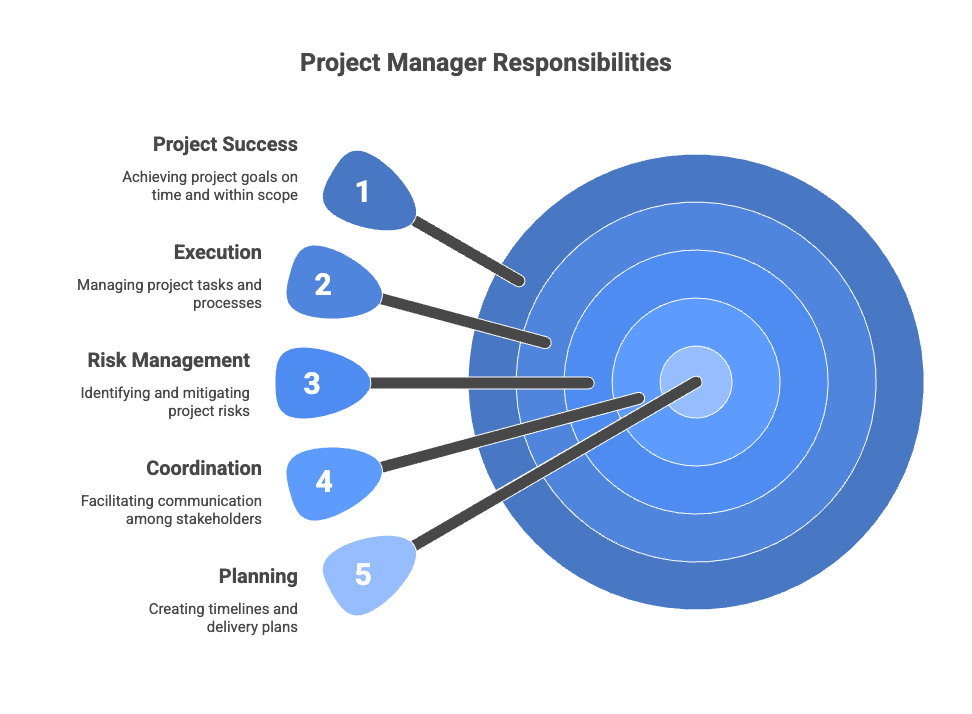
A Project Manager’s job is to make sure work gets done on time, within scope, and with as few surprises as possible. They live in the world of execution. Typical responsibilities include:
- Creating and maintaining timelines, milestones, and delivery plans
- Coordinating across teams, vendors, and stakeholders
- Managing risks, dependencies, and blockers
- Tracking scope, budget, and progress
- Communicating status clearly and consistently
A strong Project Manager brings order to complexity. They make sure nothing quietly slips through the cracks.
What they don’t own is just as important. Project Managers are not responsible for defining the product vision, deciding which features matter most to customers, or setting long-term product strategy. They execute against a direction that’s already been established.
Project Managers are especially valuable when:
- Scope is known or contractually defined
- Delivery dates carry real consequences
- Work involves multiple teams or external dependencies
- Compliance, security, or regulatory requirements are in play
If your biggest pain point is missed deadlines, unclear ownership, or delivery chaos, this is usually the role you’re missing.
What a Product Manager Actually Does
Product Managers are responsible for why the product exists and where it’s going.
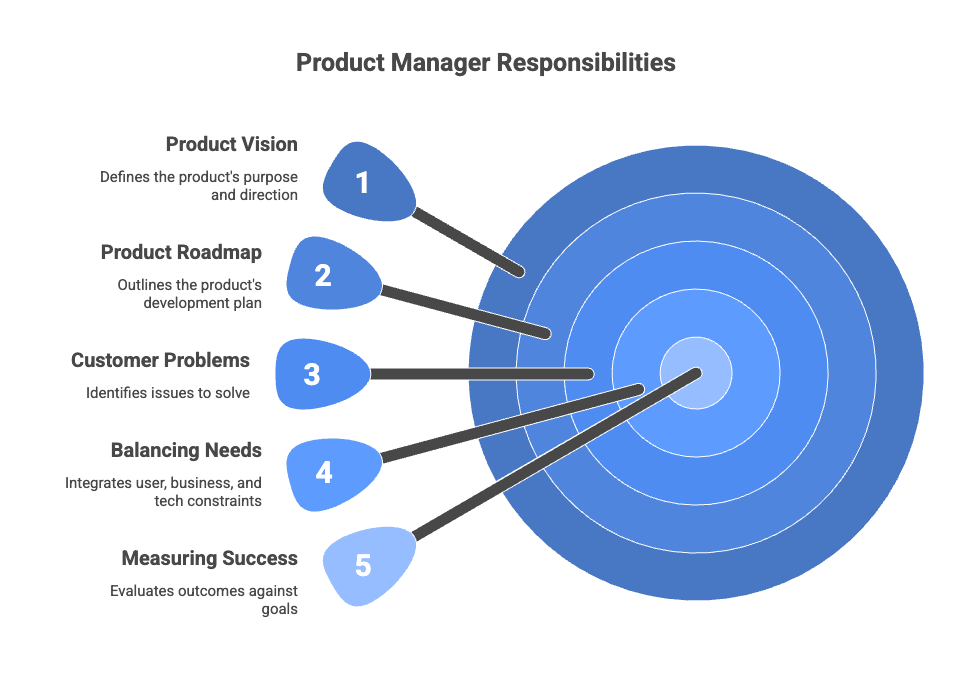
They sit at the intersection of business, technology, and user needs. Their job isn’t to ship features for the sake of shipping. It’s to make sure the team is building the right thing, in the right order, for the right reasons. Typical responsibilities include:
- Defining the product vision and long-term direction
- Owning the product roadmap
- Identifying customer problems worth solving
- Balancing user needs, business goals, and technical constraints
- Measuring success through outcomes, not just output
A Product Manager makes tradeoffs constantly. They decide what not to build as often as what to build next.
What they usually don’t handle is day-to-day task management or sprint logistics. While they collaborate closely with engineering, they’re not running standups or tracking individual tickets. Product Managers are most critical when:
- The product is evolving or scaling
- Customer needs are complex or changing
- Business strategy directly influences product direction
- Teams need clarity on priorities and outcomes
If your team ships on time but still feels unsure whether the work is actually moving the business forward, that’s a product problem, not a project one.
What a Product Owner Actually Does
The Product Owner role often causes the most confusion, especially in Agile and Scrum environments.
A Product Owner is not just a “junior Product Manager.” And they’re not just administrators for Jira.
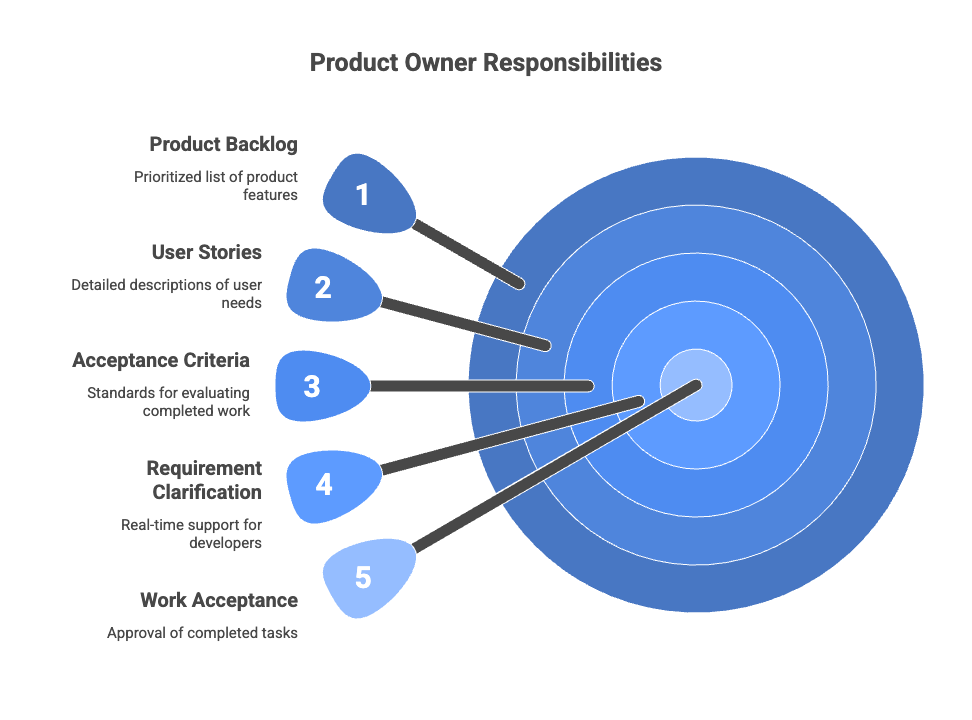
Their core responsibility is to ensure the engineering team always knows what to work on next and why. Typical responsibilities include:
- Owning and prioritizing the product backlog
- Writing and refining user stories
- Defining acceptance criteria
- Clarifying requirements in real time during development
- Accepting or rejecting completed work
Product Owners translate strategy into execution-ready work. They operate much more closely with the engineering team than a Product Manager typically does.
What they usually don’t own is the long-term product vision or broader business strategy. In many organizations, Product Owners work under the direction of a Product Manager, especially on larger or more complex products.
Product Owners are most effective when:
- Teams follow Scrum or structured Agile practices
- Engineering needs fast, unambiguous decisions
- Backlogs are large or change frequently
- Product strategy already exists, but execution needs focus
If developers are constantly blocked by unclear requirements or shifting priorities mid-sprint, a Product Owner can dramatically improve flow.
👋 Not sure which role your team really needs right now?
Curotec helps teams clarify ownership, reduce friction, and design product and delivery structures that fit their stage and goals.
Trusted by tech leaders at:



How These Roles Differ at a Glance
While titles vary by company, the distinction usually comes down to focus:
- Project Manager: How and when work gets delivered
- Product Manager: Why the work matters and what should be built
- Product Owner: What the team is building right now and how it’s defined
Problems start when one role is asked to cover all three areas without the authority, time, or context to do so well.
How These Roles Work Together on Strong Teams
On well-structured teams, these roles reinforce each other.
A common pattern looks like this:
- The Product Manager sets direction and priorities based on outcomes
- The Product Owner translates those priorities into executable backlog items
- The Project Manager ensures delivery stays on track and risks are managed
That doesn’t mean every team needs all three roles. Smaller teams often combine responsibilities. The key is to be explicit about what’s being combined and what’s not.
Combining roles works best when:
- Scope and strategy are relatively stable
- Communication is tight
- Decision-making authority is clear
It breaks down when:
- One person is expected to own vision, backlog, and delivery logistics
- Titles are assigned without clarity on responsibilities
- Teams grow, but roles don’t evolve with them
Common Mistakes Teams Make
Some of the most common issues we see aren’t about skill, but about misalignment. Examples include:
- Hiring a Product Owner when the team actually needs a product strategy
- Expecting a Project Manager to make roadmap decisions
- Treating Product Owners as note-takers instead of decision-makers
- Using titles as a shortcut instead of defining ownership clearly
These mistakes don’t usually show up immediately. They surface later as slow decision-making, constant rework, or products that technically ship but don’t deliver real value.
How to Decide Which Role You Actually Need
A simple way to think about it:
- If your problem is missed deadlines or delivery risk, you likely need stronger project management
- If your problem is unclear priorities or weak business alignment, you likely need product management
- If your problem is execution friction or backlog confusion, you likely need a product owner
The right answer depends less on titles and more on the problems you’re trying to solve.
Titles don’t build great products. Clear ownership does.
When teams understand who owns strategy, who owns execution, and who owns delivery mechanics, decisions move faster, and work improves. When those lines blur, even strong teams struggle. Getting this right early isn’t about process for the sake of process. It’s about giving teams the clarity they need to build, ship, and scale with confidence.
When product strategy, execution, and delivery aren’t clearly defined, even strong teams struggle. Curotec helps product and engineering leaders clarify roles, streamline decision-making, and align teams around outcomes instead of titles. Reach out to start the conversation.